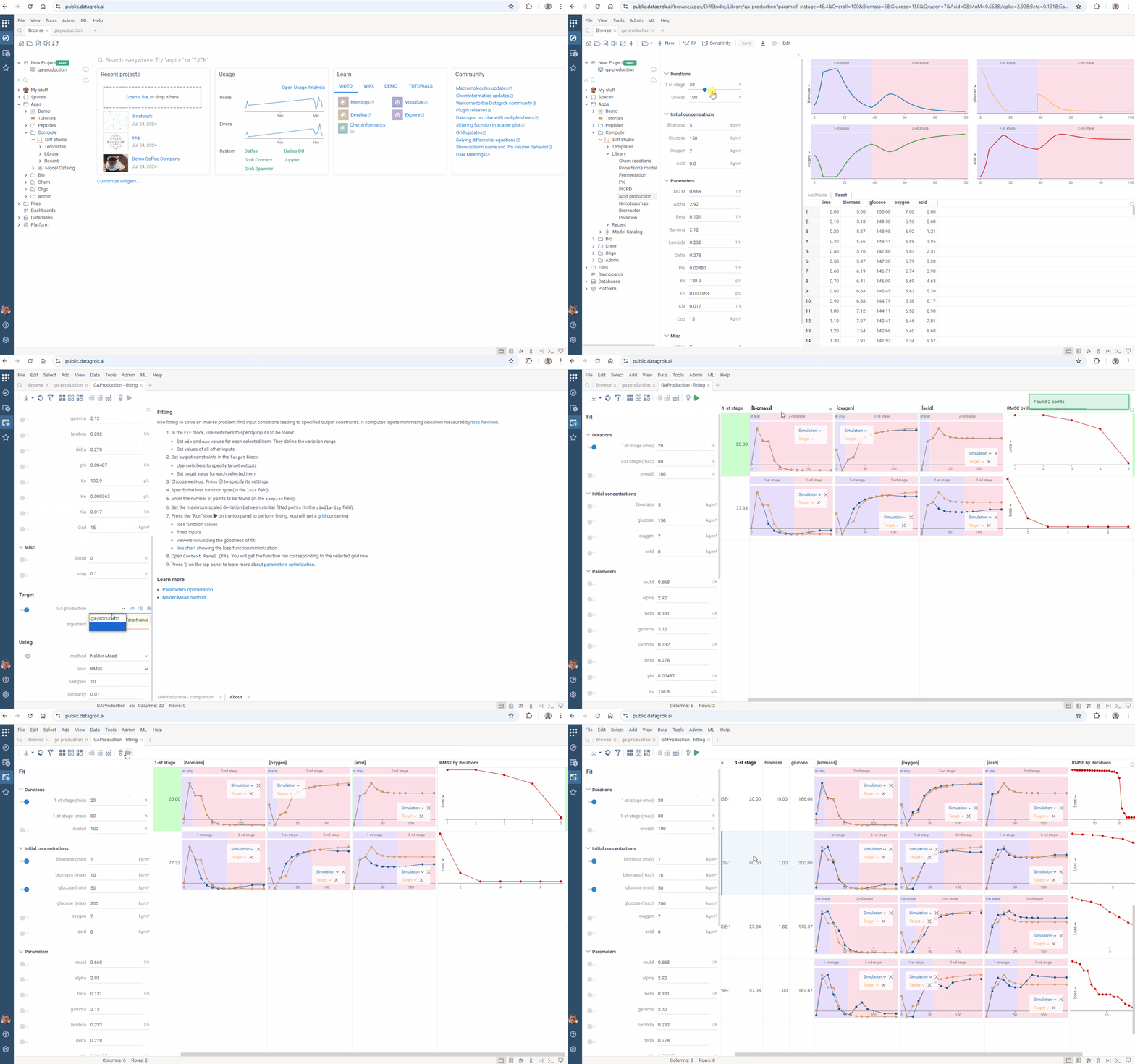
Diff Studio provides a simulation of multi-stage processes. Due to the new Diff Grok features, parameter optimization for such models runs in parallel now:
2 Likes
Diff Studio enables modeling cyclic processes, in particular pharmacokinetic-pharmacodynamics. The new version of the Diff Grok library provides parallel parameters optimization for such models.
2 Likes
Check the new release of Diff Studio.
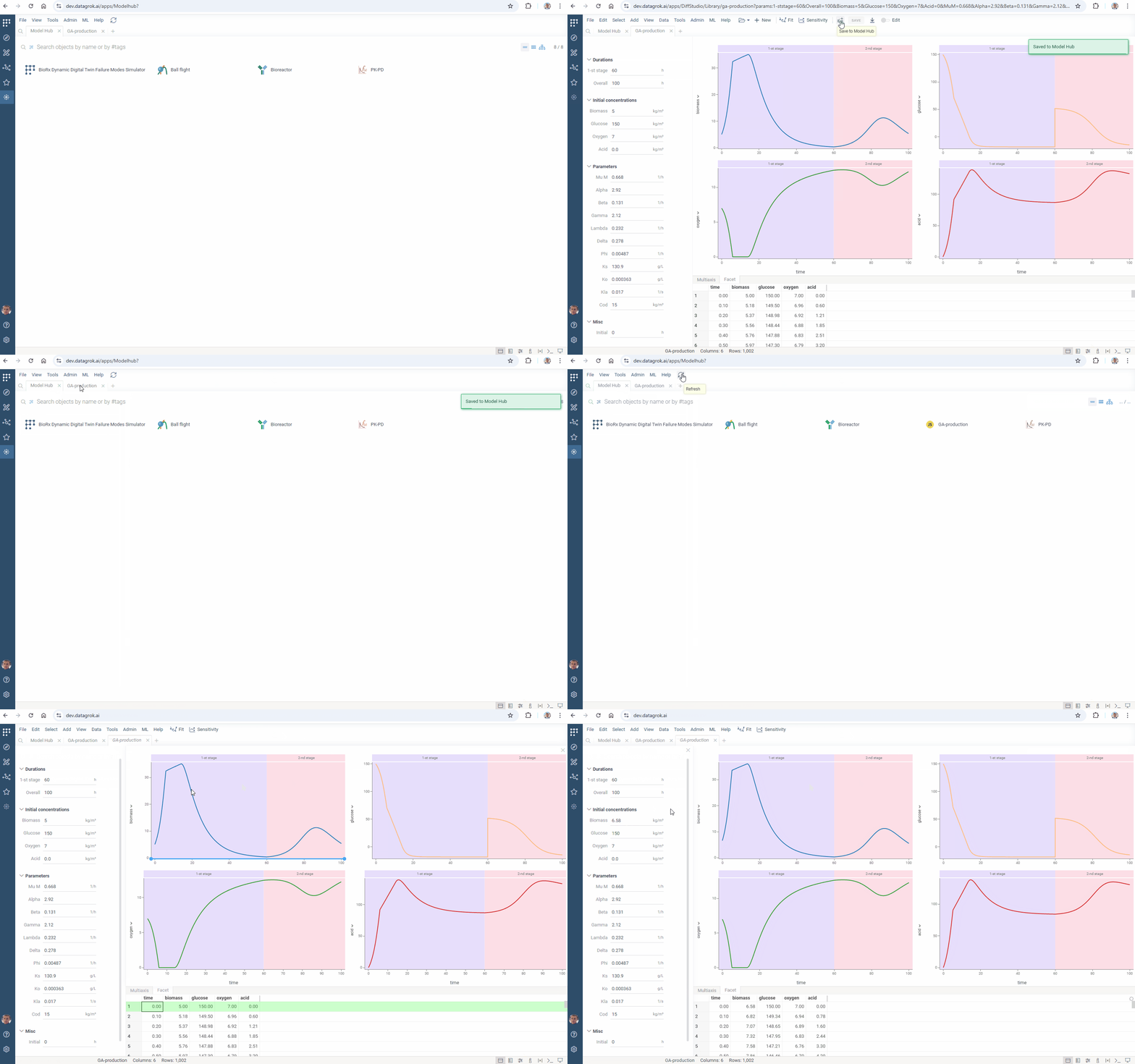
You can add your model to Model Hub in one click:
2 Likes
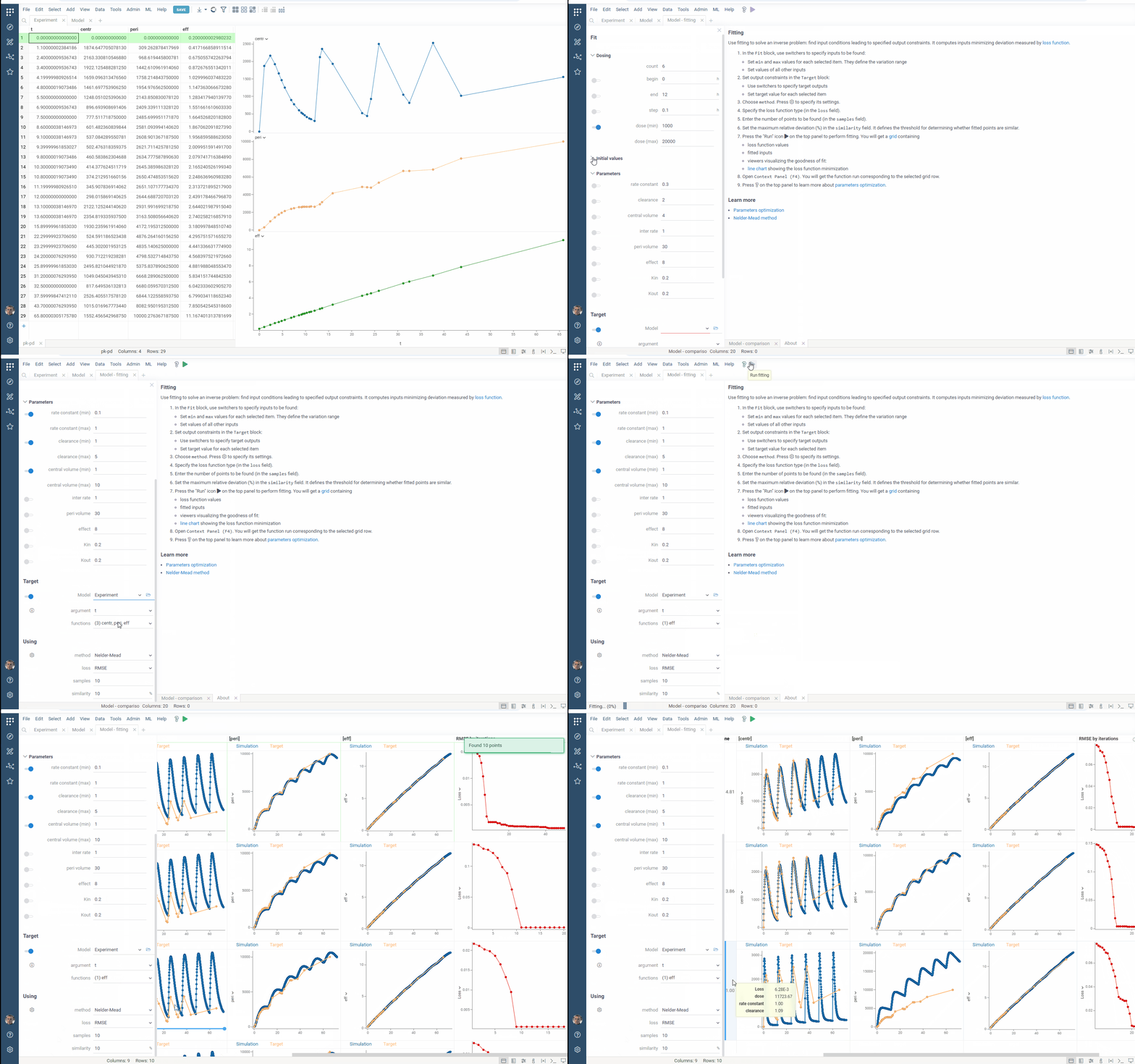
Meet improved parameters optimization for Diff Studio models:
- Flexibility: select the target function columns of your table with experimental data
- Output management: filter similar results to get the most different curves
- Usability: use navigation when specifying the target output
2 Likes
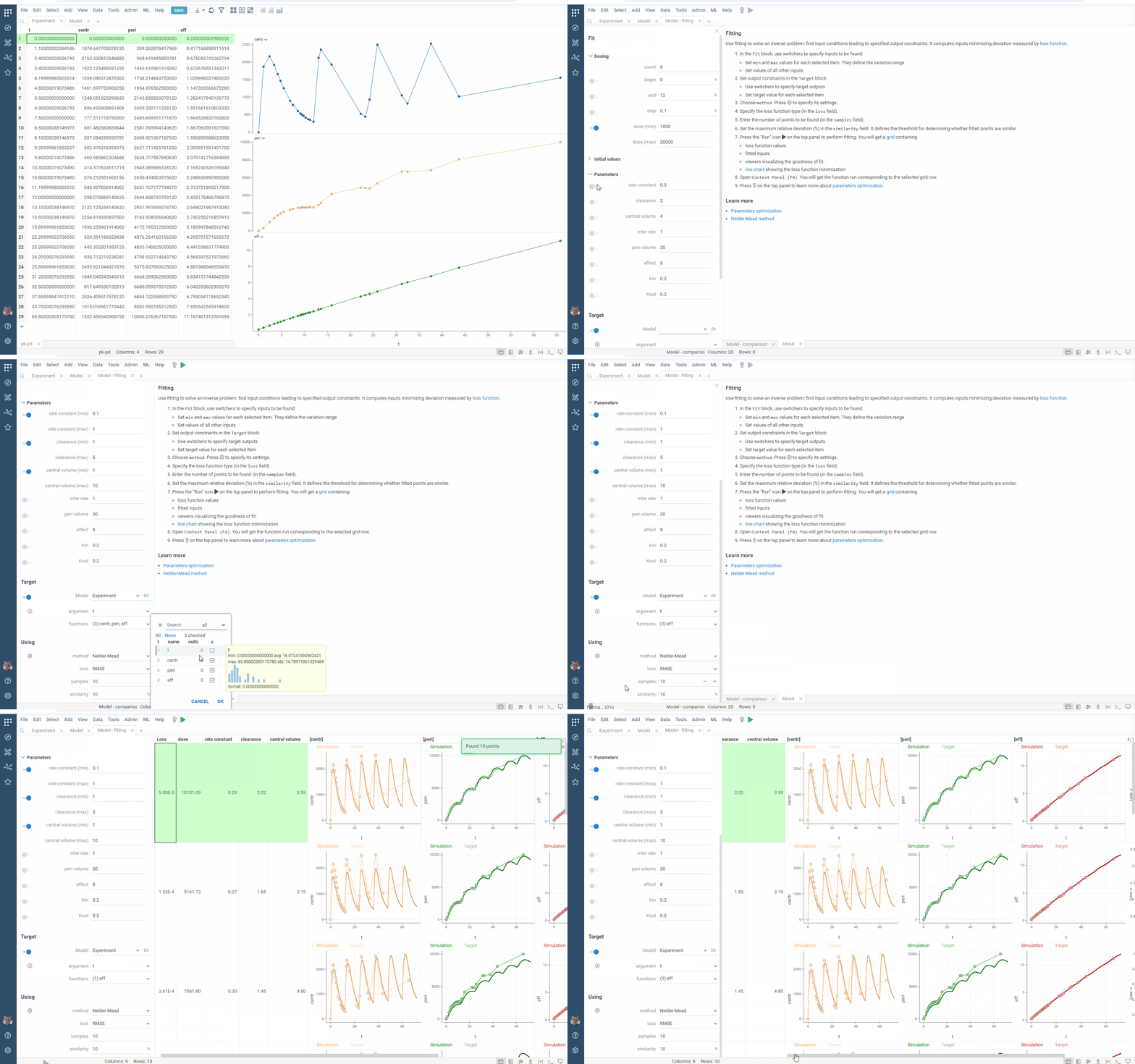
Check the improved model analysis. Explore results of parameter optimization in a more convenient way:
2 Likes
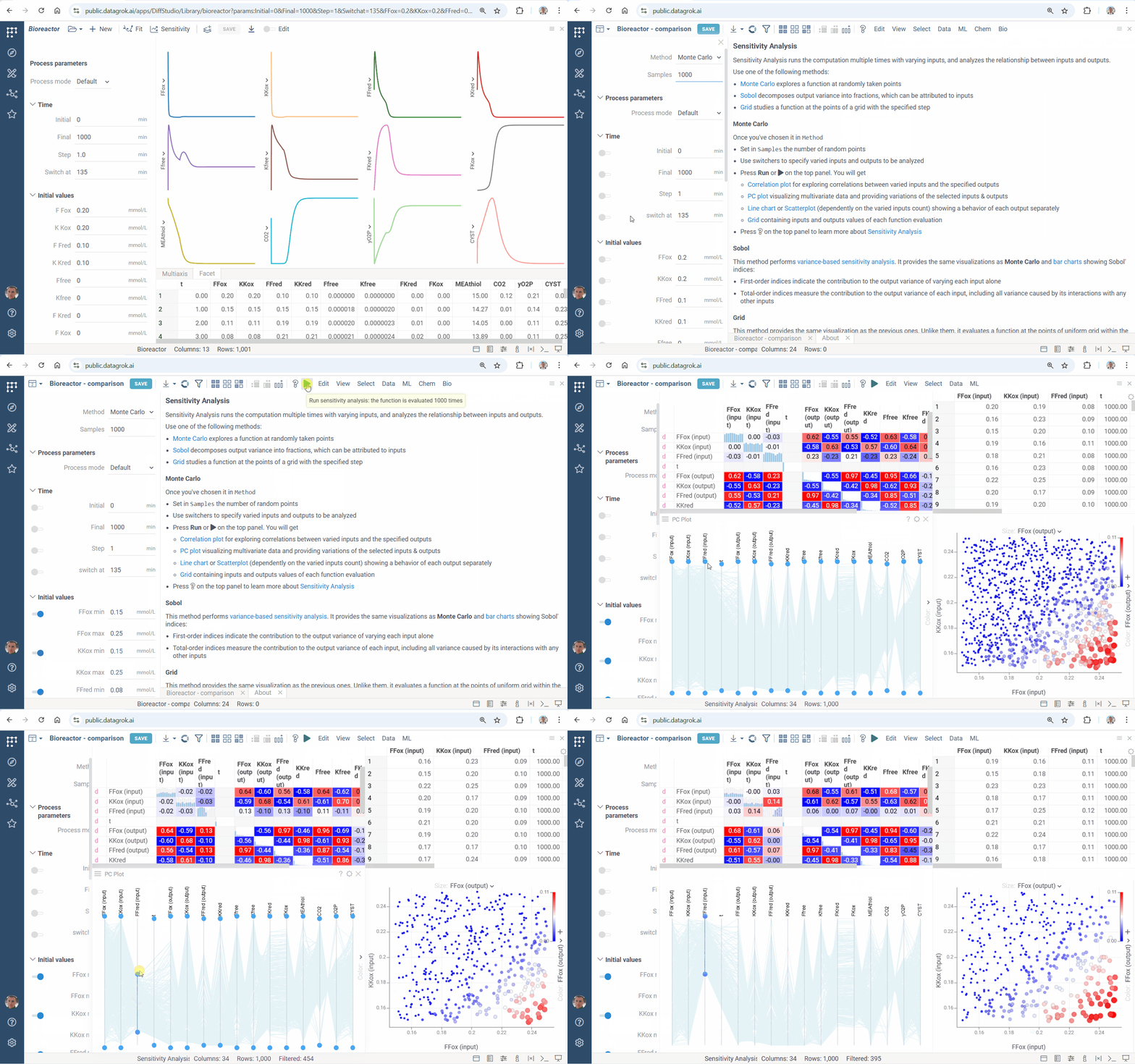
Meet accelerated sensitivity analysis for Diff Studio models. Use viewers’ features to explore the impact of model input variation on its output:
2 Likes
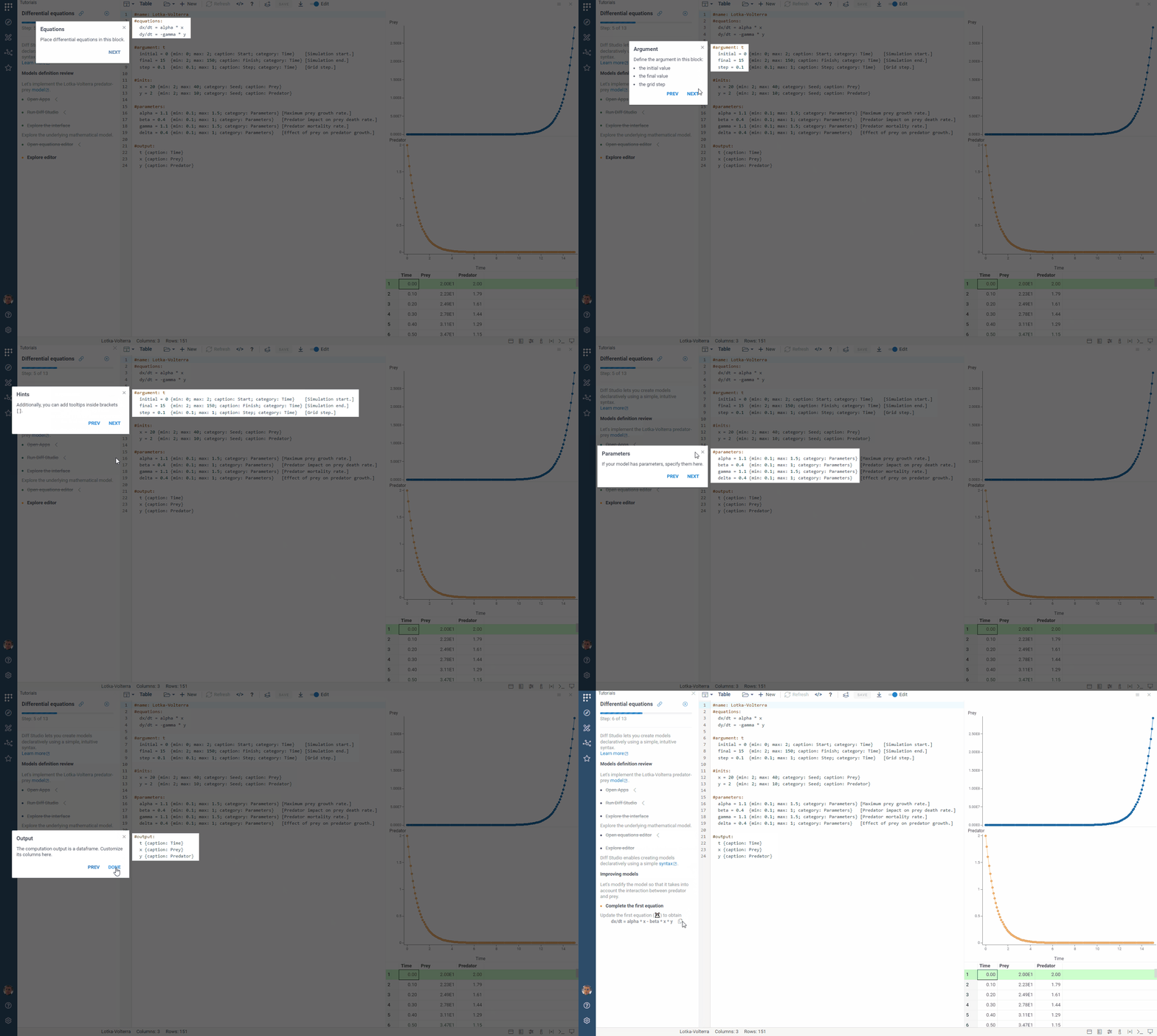
We’ve updated our Diff Studio tutorial! Check it out here. The new version improves navigation through model components:
1 Like
Diff Grok now supports 9 numerical methods for solving ODEs in the browser. Six new methods join the existing Rosenbrock-Wanner solvers:
- Runge-Kutta - for non-stiff ODEs:
- Bogacki-Shampine 3(2)
- Runge-Kutta-Fehlberg 4(5)
- Dormand-Prince 5(4)
- Adams - multistep predictor-correctors of order 4 and 5
- LSODA - automatic stiffness detection
1 Like
Diff Studio now supports 10 numerical methods for solving ODEs in the browser. Seven new methods join the existing Rosenbrock-Wanner solvers:
- Runge-Kutta & Adams - for non-stiff ODEs: Bogacki-Shampine 3(2), Runge-Kutta-Fehlberg 4(5), Dormand-Prince 5(4), and multistep predictor-correctors of order 4 and 5
- LSODA, CVODE - adaptive stiff/non-stiff solvers
Match the solver to your problem: Runge-Kutta for smooth systems, Adams when function evaluations are expensive, LSODA & CVODE when stiffness is unknown, and Rosenbrock-Wanner for known stiff equations.
Check it: Diff Studio.
1 Like
Meet the new release of Diff Grok. Version 1.3.0 provides model export to publication-ready TeX and Markdown!  You can now convert your ODE-based models directly into formats ready to paste into a paper, docs, or wiki.
1 Like
Big milestone for Diff Studio – two papers about the project have just been published! :
- Diff Studio: Ecosystem for Interactive Modeling by Ordinary Differential Equations in Journal of Open Source Software (2026). This one is all about the library side – Diff Grok, the open-source engine behind Diff Studio.
- Diff Studio: Web-Based Environment for Interactive Modeling with Ordinary Differential Equations in Springer, CoMeSySo 2025 Proceedings (Lecture Notes in Networks and Systems, vol. 1901) – foundational paper.
1 Like
This is great, congrats @vmakarichev !
1 Like